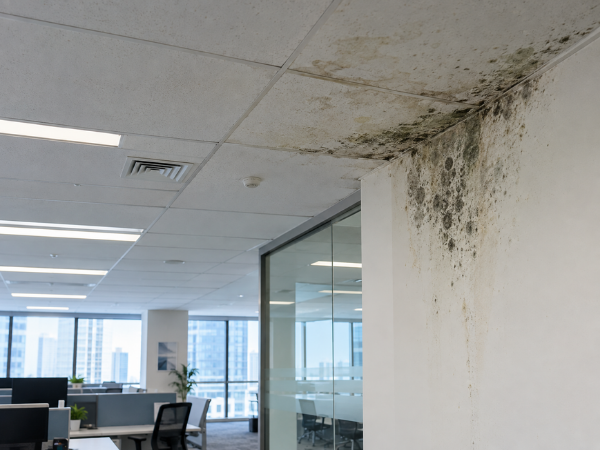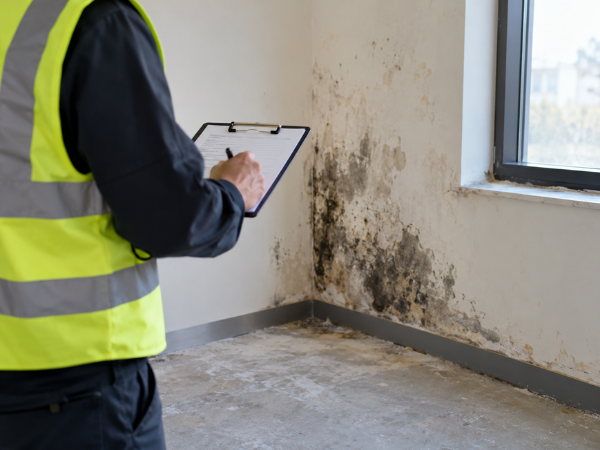
This guide is for facilities, asset and housing management teams who have appointed a mould remediation contractor and need to know whether the work is being done properly. It follows the sequence that defines competent remediation: inspect, establish the root cause, control and remove the source, then remediate and verify. At each stage it sets out what you can check yourself, without being a mould specialist.
Remediation is largely hidden work. Once containment goes up, only the people inside it can see what happens there. The job is then usually judged at the end by whether the area looks clean. Looking clean and being remediated are not the same thing, and the difference tends to show months later when the problem comes back.
Why Faster Response Has Not Meant Better Outcomes
Awaab’s Law has changed the pace of damp and mould work across the UK. Since October 2025, social landlords in England have had to investigate and make safe significant damp and mould hazards within fixed timescales. The same framework extends to a wider range of hazards from 30 November 2026. The result is more inspections, more works orders, and more pressure to close cases quickly.
What the law defines is when a response must happen. It does not set a standard for how an inspection is carried out, what it must establish, or what competence the inspector needs. A deadline can be met by an inspection that never identifies the moisture source, followed by works that treat the visible surface. The case closes on time, the mould returns, and the case reopens.
The same pattern appears in commercial buildings wherever contractors are judged on response time rather than outcome. Supervision is how property teams close that gap.
The checks below follow IICRC S520 principles, the standard most UK remediation contractors cite in their own method statements. They also follow the guidance of the UK Centre for Mould Safety, which promotes process over products and has been vocal against “wash and block” treatments. You don’t need a copy of either to supervise against them. You need to know which questions they expect a contractor to be able to answer.
Stage One: Inspect
The first check happens before anyone is on site. Find out whether the scope of works is based on a mould inspection or on a visual quotation. These are different documents. An inspection records the extent of affected material, the condition of the area and the evidence of moisture. A quotation prices the work a contractor could see on the day they visited.
Next, check whether the scope is written against defined conditions. S520 principles use condition categories to separate three things: normal background fungal ecology, settled spores that came from elsewhere, and actual growth. A scope written against those categories states which areas fall where and what will be done in each.
Compare that with a scope that simply says, “clean the affected area”. That leaves the boundary of the work to the contractor’s judgement on the day. There is then no agreed standard to supervise against, and no basis for saying the work is complete. The first kind of scope can be supervised. The second cannot.
Stage Two: Establish the Root Cause
Remediation deals with contamination. It does not deal with the moisture that produced it. If the moisture source has not been identified and corrected, contamination is likely to return however well the removal is carried out.
Common drivers include condensation, water leaks, rising or penetrating damp, building defects and ventilation that doesn’t match how the space is used. The scope should name the cause and state who is correcting it and when. Under time pressure, this is the stage most often skipped.
If no inspection has established the cause, commissioning one before works begin is almost always less disruptive than finding out halfway through that the scope rested on the wrong assumption.
Stage Three: Control and Remove the Source
- Containment and pressure. Containment stops contamination spreading into unaffected parts of the building while material is being disturbed. You can confirm two things without entering the work area:
- Containment should be up and working before any disturbance begins; the work area should be held under negative pressure relative to the surrounding space, so air moves into containment rather than out of it.
- Access discipline matters more than it appears. A door propped open for convenience, or someone walking through without authorisation, defeats the arrangement for as long as it lasts. Across UK commercial buildings, this is the most common point at which an otherwise competent remediation is compromised.
- Removal, not surface treatment. Source removal is the core principle of S520. Contamination is physically removed rather than treated where it sits. Affected material is either cleaned to a defined standard or taken out. It is not sprayed, sealed, or painted over.
- If a method statement relies mainly on applying a biocide or encapsulant to contaminated material, ask what is actually being removed and how that removal will be evidenced.
- Where the ventilation or air distribution system forms part of the contamination pathway, the scope should cover that system and not stop at room surfaces. NADCA standards are the usual reference point for that part of the work.
Stage Four: Remediate and Verify
Records made during the works. Records created while the work is happening carry more weight than records put together afterwards. If questions arise later, from the contractor, an insurer, a regulator or an occupant, evidence made at the time is what holds up. It is reasonable to expect:
- daily site records;
- photographs of containment, and of affected areas before and after removal;
- filter change records for air filtration equipment;
- the name of the person supervising on site each day.
Verification before containment comes down. Handback is when a project is judged complete, so verification belongs before containment is removed, not after. Indoor air quality testing and a structured visual assessment at this stage show whether the area is ready for people to return.
Agree at the outset who will carry out that assessment. A contractor confirming that their own work has succeeded is self certification, and it carries the weight of self certification. An assessment by a party with no commercial interest in the remediation produces a document that stands up when someone else reads it.
A Supervision Checklist
- An inspection exists and records the extent and condition of affected areas.
- The root cause is identified, and someone is responsible for correcting it.
- The scope is written against defined conditions, not just “the affected area”.
- Containment is up and working before disturbance begins.
- The work area is held under negative pressure relative to the surrounding space.
- Access to containment is controlled and logged.
- The method statement describes removal, not surface treatment.
- Ventilation systems are in scope where they form part of the pathway.
- Daily records and photographs are being produced as the work proceeds.
- Verification is scheduled before containment comes down, and the party doing it is agreed.
Independent Inspection and Supervision from Envida Environmental
Envida Environmental provides independent mould inspections, remediation supervision and post remediation verification for UK property teams. We also offer IICRC aligned inspection and remediation training, so your own staff can run these checks with confidence.
Speak to our team about your next remediation project
Facts in the copy and where they come from
Awaab’s Law Phase 1: It came into force on 27 October 2025, covering damp and mould hazards and all emergency hazards. Phase 1 came into force on 27 October 2025 and covers damp and mould hazards alongside all emergency hazards. rpclegal
Awaab’s Law Phase 2: Government has confirmed Phase 2 starts on 30 November 2026, widening the range of hazards social landlords must investigate and address within prescribed timescales. lawsociety
UK Centre for Mould Safety: It is a community interest company that publishes free technical guidance and promotes an industry standard of care that prioritises process over products. Tackling widespread use of “wash and block” treatments is one of its stated priorities. the-microbiologistdesigningbuildings
I deliberately left the specific Awaab’s Law timescales (24 hours, 10 working days and so on) out of the post. They apply only to social landlords and would date the article if guidance changes. Once you approve the text, I’ll build the Word document.
Sources:
- Law Society: Awaab’s Law Phase 2
- RPC: Awaab’s Law, the latest
- Designing Buildings: UK Centre for Mould Safety launch
- The Microbiologist: UKCMS National Training Academy
FAQs
1. Do we need independent supervision if we have appointed a reputable contractor?
Competence and oversight are separate questions. Independent supervision gives you a record of what was done, which matters if the problem recurs or a dispute follows.
2. What is the difference between a mould investigation and a mould remediation quotation?
An investigation establishes the moisture source, extent, and condition of the area. A quotation prices the work a contractor could see. Only the first defines a scope.
3. Can the remediation contractor carry out the final indoor air quality testing?
They can, but the result is self-certification. An assessment by a party without a commercial interest in the remediation carries more weight with insurers and occupiers.
4. When should verification take place?
Before containment is removed. Once the barriers are down, the condition of the area at completion can no longer be established with any confidence.
5. Can our in-house facilities team be trained to run these checks?
Yes. We provide practical training in mould inspection, moisture investigation and remediation, developed for property, facilities, housing and maintenance teams responsible for managing buildings.
Call to Action
Envida Environmental are independent damp and mould specialists working with facilities teams, property owners and housing providers across the UK and Northern Ireland. We provide independent supervision of mould remediation projects, mould investigations and indoor air quality services, and we are certified to the standards referenced throughout this guide.
+447398597188
sales@envida.co.uk
Talk to our team about your building.